
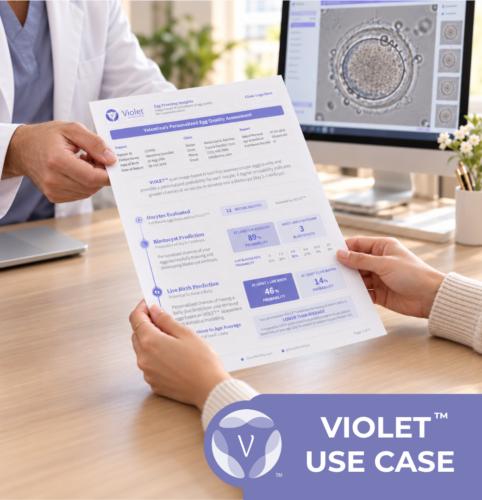
Young age in patients and a reassuring ovarian reserve can provide a favourable starting point for fertility preservation counselling. However, neither establishes the developmental potential of an individual patient’s oocytes. For clinicians, this leaves an important information gap when discussing how many oocytes to freeze and if additional cycles may support a patient’s future family goals.
These conversations also extend beyond reproductive biology. Patients consider oocyte freezing at different stages of life, shaped by their relationships, financial circumstances, personal priorities and readiness for parenthood. While circumstances and intentions can change, the reproductive window remains finite and oocyte freezing offers an opportunity to preserve oocytes today for potential use when a patient is ready to pursue parenthood.
This use case explores fertility preservation in a 28-year-old woman with good ovarian reserve. While age and the number of mature oocytes frozen remain important predictors of future reproductive potential, the numbers alone cannot predict oocyte potential.
VIOLET™ provided personalized insights into the developmental potential of her frozen mature oocytes, including their predicted likelihood of resulting in a live birth. Alongside her clinical profile and family goals, these insights supported a more individualized discussion about whether her stored oocytes were likely to meet those goals and if further oocyte freezing could be beneficial.
PATIENT CASE:
Patient Background:
- Single
- One pregnancy 7 years ago which ended in a miscarriage (G1P0)
- 12 day Antagonist stimulation cycle with 10,000 Iu HcG trigger
Oocyte Freezing Cycle Summary:
Cycle details:
- 16 oocytes retrieved
- 12 mature oocytes cryopreserved in 4 straws
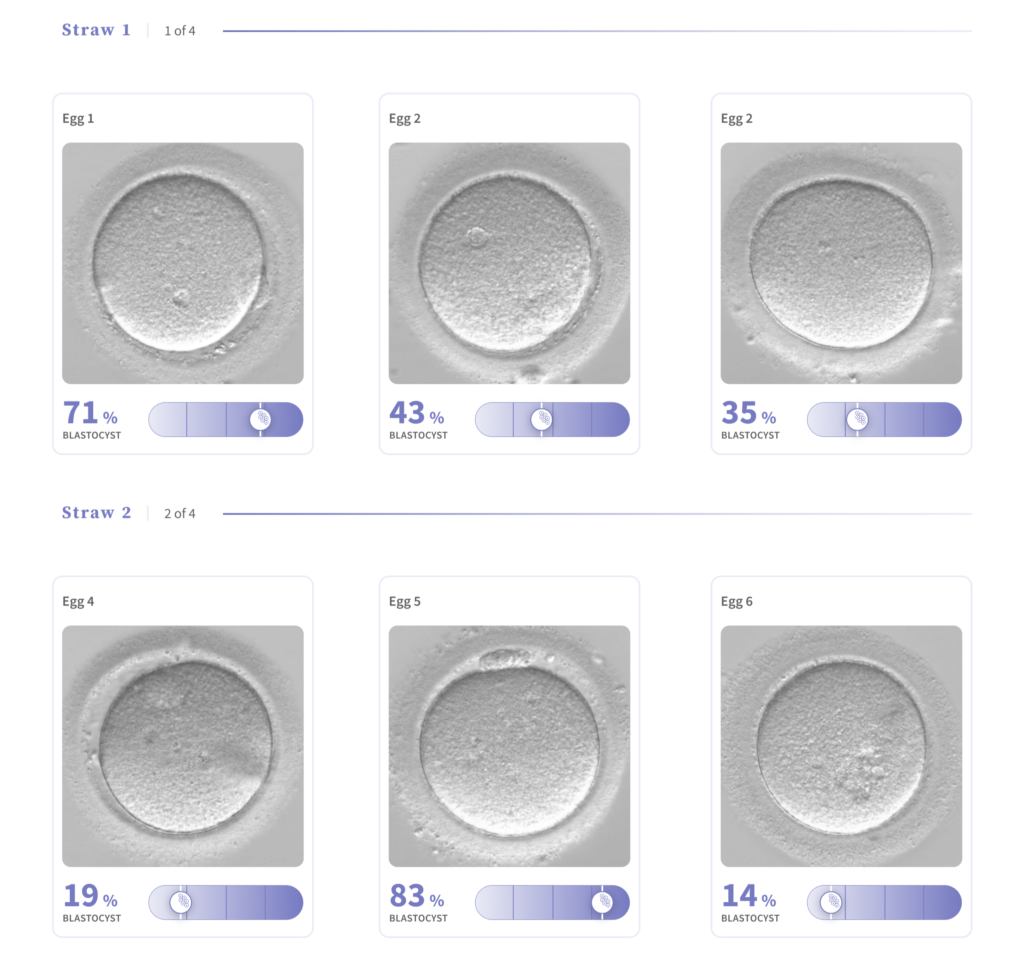
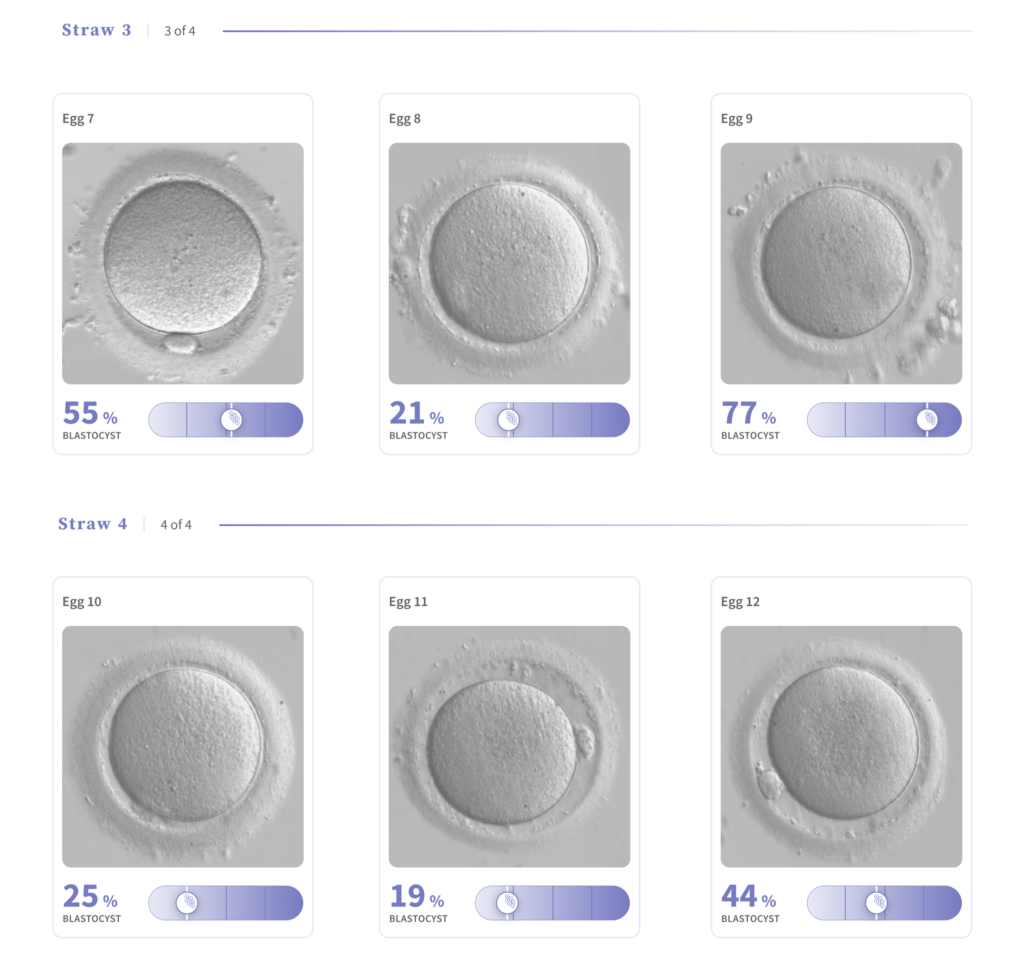
The VIOLET™ report provided documents each assessed mature oocyte with its image and individual blastocyst prediction.
VIOLET™ PREDICTIONS:
- Most likely number of blastocysts: 3-5 (30% probability)
- Predicted chance of 1 live birth: 46%
- Predicted chance of 2 live birth: 14%
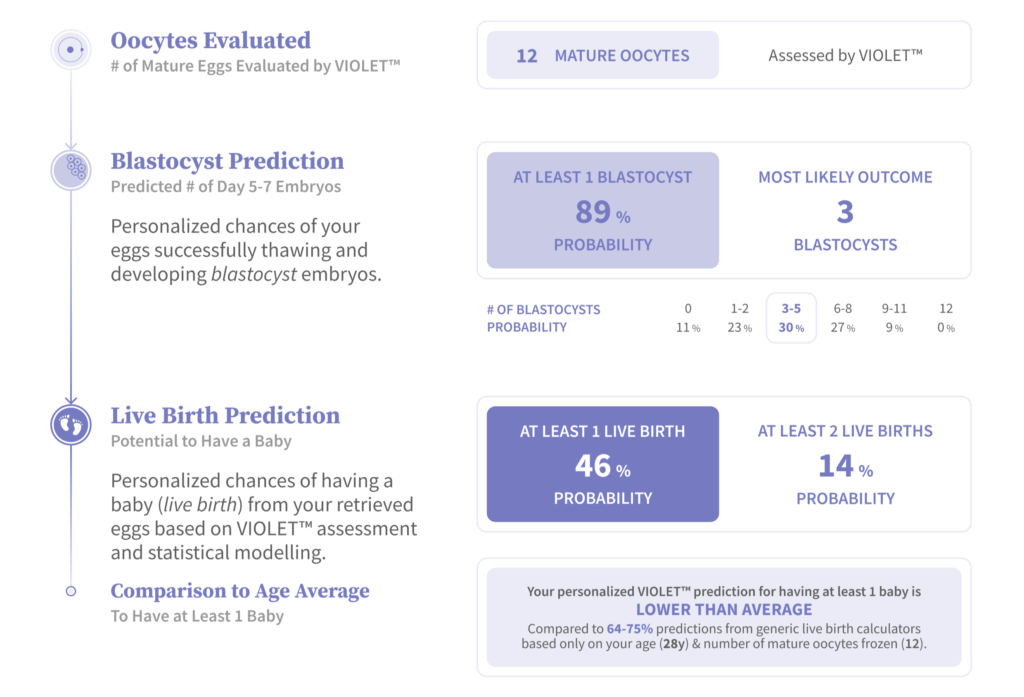
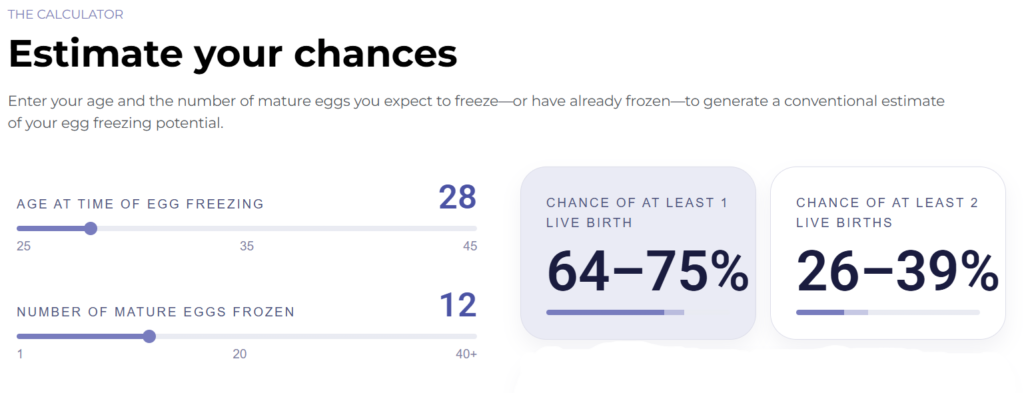
VIOLET™ predicted an 89% chance of at least one blastocyst from her 12 mature oocytes, but just three blastocysts as the most likely outcome despite her young age. Her predicted chances of at least one and at least two live births were 46% and 14%, respectively, and the conventional age-based prediction for at least one live birth was below the 64–75% and for 2 live births is at 26-39% estimated by an egg calculator using age and oocyte number alone.
CLINICAL IMPACT: HOW VIOLET™ INFORMED NEXT STEPS
For clinicians, VIOLET™ offers an additional tool to translate personalized oocyte quality insights by:
1. Adding context to a reassuring clinical profile
At 28, with 12 mature oocytes frozen, the patient had encouraging indicators for fertility preservation. VIOLET™ added personalized insights into oocyte developmental potential, revealing a predicted chance of at least one live birth below estimates based on age and oocyte number alone.
2. Managing expectations beyond blastocyst formation
Although VIOLET™ predicted an 89% chance of at least one blastocyst, the most likely outcome of just three tempered the reassurance her young age and 12 frozen mature oocytes might otherwise provide. The predicted 46% chance of at least one live birth and 14% chance of at least two further helped the clinician frame these results in the context of her future family goals.
3. Supporting individualized next-cycle planning
These insights supported a discussion about whether another oocyte freezing cycle could be beneficial. Alongside her desired family size, clinical profile and personal circumstances, VIOLET™ helped inform next steps beyond reassurance based on young age and oocyte number.
4. Providing a personalized record at the end of the cycle
The VIOLET™ report gave the patient a transparent visual record of her assessed cryopreserved oocytes, with individual blastocyst predictions and overall cohort insights. She could take this record home, revisit it and use it in future planning discussions with her clinician.
If you’ve found this example helpful in understanding how VIOLET™ can be incorporated at your clinic or have feedback on other aspects related to your use of Future Fertility’s egg quality assessments, please share it with us at info@futurefertility.com.
You Might Also Like …
Join our mailing list for dispatches on the future of fertility