
Patients with low prognosis IVF often face a difficult clinical reality: limited time, limited ovarian reserve, and limited opportunities to optimize treatment outcomes. While conventional stimulation protocols may require multiple cycles over several months, some patients may benefit from more time-efficient approaches that maximize oocyte yield within a shorter timeframe.
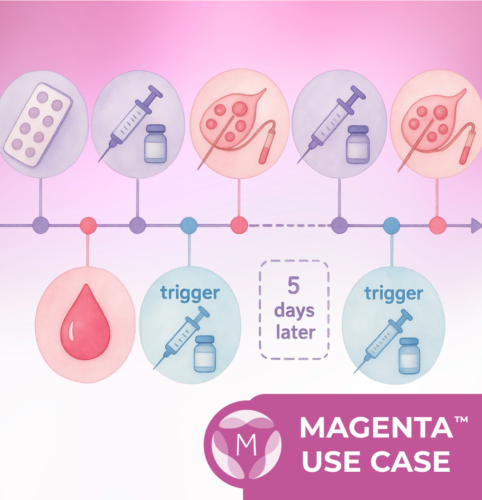
One strategy used in these patients is DuoStim (double stimulation in a single ovarian cycle), where two consecutive ovarian stimulations and oocyte retrievals are performed during the same menstrual cycle. By taking advantage of both follicular and luteal phase follicular waves, DuoStim aims to increase the number of mature oocytes and embryos obtained in a shorter period of time while potentially reducing patient dropout between unsuccessful cycles. However, decisions around proceeding with the second stimulation must often be made before complete embryology outcomes from the first retrieval are available.
Obtaining more oocytes does not always guarantee better outcomes. Different stimulation approaches may influence follicular recruitment, oocyte competence, and subsequent embryo development differently. In these situations, MAGENTA™ may provide earlier insight into oocyte quality may help clinicians make faster and more targeted adjustments before valuable time is lost.
MAGENTA™ provides objective Day 0 oocyte quality insights before ICSI, helping clinicians evaluate whether a stimulation protocol is producing competent oocytes and informing real-time decision-making during DuoStim workflows.
PATIENT BACKGROUND:
- 37-year-old female, G2P1
- Previous spontaneous vaginal delivery following natural conception 2 years earlier
- 2 years of secondary infertility despite regular timed intercourse
- Two unsuccessful ovulation induction cycles
- Ovarian reserve lower than expected for age
- Normal male semen parameters
- DuoStim IVF-ICSI strategy planned due to low prognosis status and the need to maximize oocyte yield within a limited timeframe with freeze-all strategy
FIRST STIMULATION PROTOCOL
Follicular Phase Stimulation
- Estradiol priming initiated on Day 21 of the natural cycle
- 200 IU recombinant FSH daily
- Recombinant LH supplementation (75 IU daily) introduced from Day 6 onward
- GnRH antagonist introduced from stimulation Day 6 onward
- Retrieval planned with leading follicle reaching 20 mm
- GnRH agonist trigger administered on Day 11
- Oocyte retrieval performed on Day 13
First ICSI Cycle outcome
- 12 oocytes retrieved
- 10 mature oocytes and injected
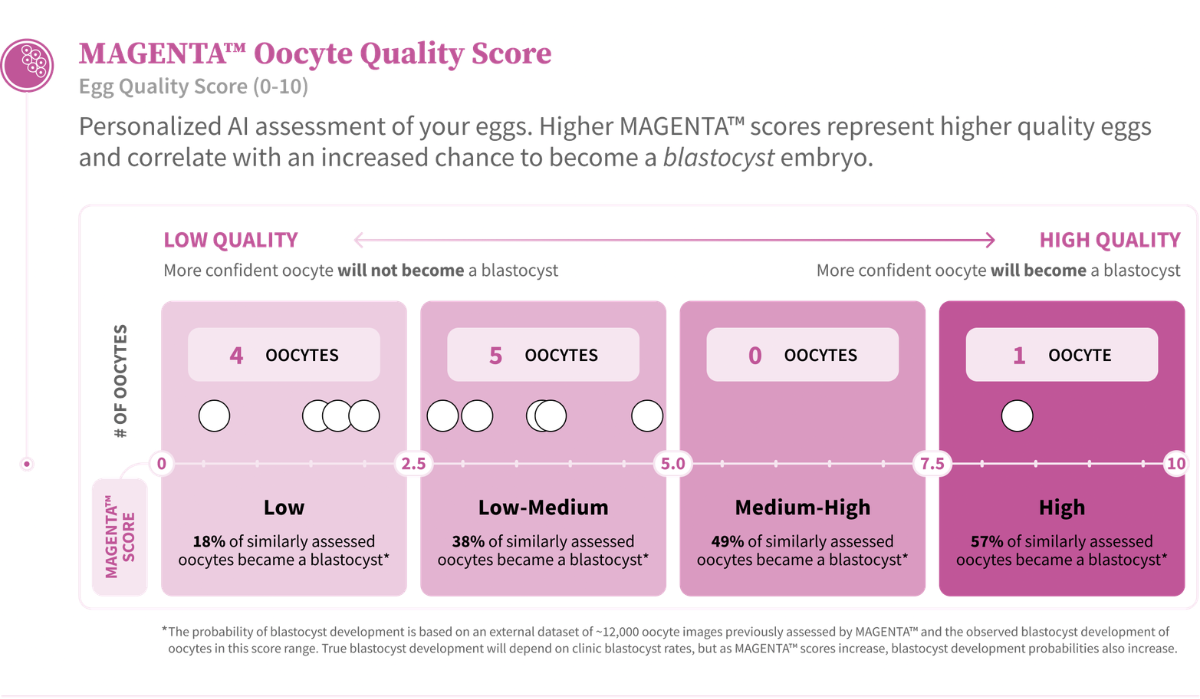
Despite an uncomplicated ICSI procedure, MAGENTA™ Day 0 results demonstrated that only one oocyte fell within the high-quality range, while the remaining cohort scored predominantly low or low-medium quality.
- 6 of 10 oocytes fertilized
- Day 3 embryo assessment:
- 1 fair-quality embryo
- Remaining embryos poor quality with 4 cells or fewer with high fragmentation
MAGENTA™ INTERPRETATION:
- Although the number of mature oocytes retrieved appeared encouraging, MAGENTA™ suggested compromised oocyte competence across the cohort before conventional embryo assessment outcomes became fully apparent.
- This early signal prompted the clinical team to reconsider whether modifications to the second stimulation could improve oocyte quality and downstream embryo development.
SECOND STIMULATION PROTOCOL
The second stimulation began 4 days after the first retrieval while the first cohort of embryos was still in culture.
Primary Adjustments Made
- Recombinant FSH increased to 275 IU daily
- Growth hormone co-treatment
- Dual trigger strategy:
- GnRH agonist + 5000 IU hCG
Second ICSI Cycle outcome
- 13 oocytes retrieved
- 11 mature oocytes and injected
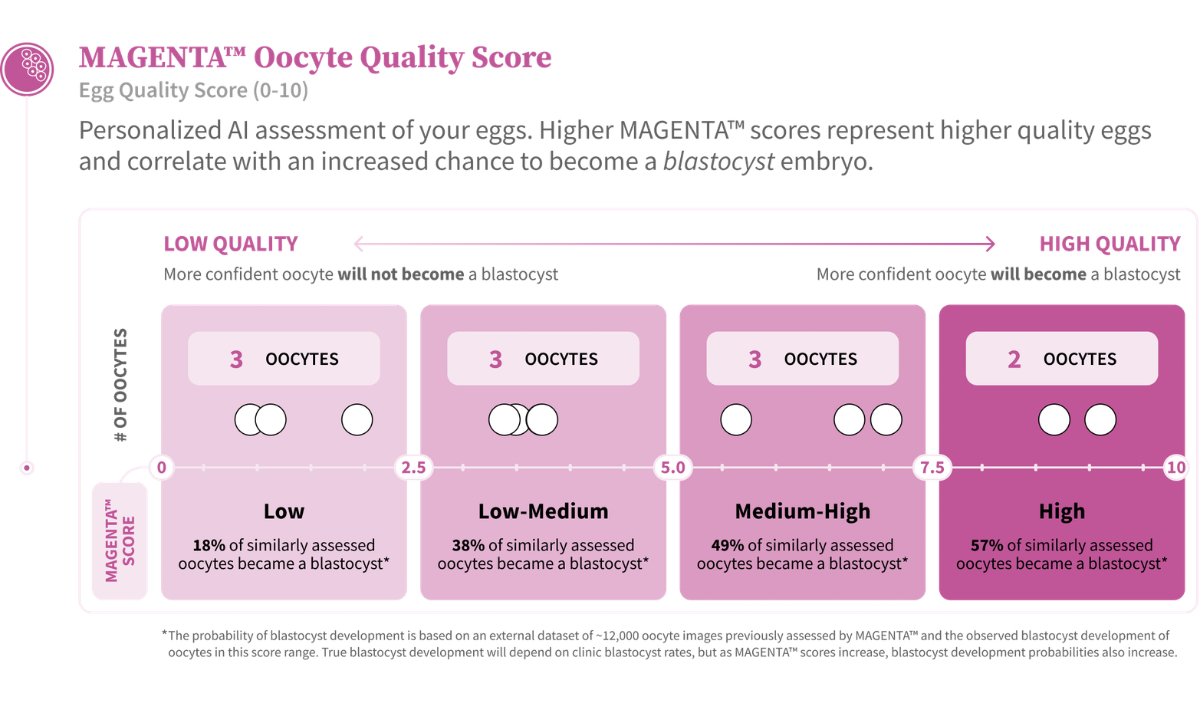
MAGENTA™ Day 0 assessment demonstrated a notably improved oocyte quality distribution:
- 2 high-quality oocytes
- 3 medium-high quality oocytes
- 3 low-medium quality oocytes
- 3 low-quality oocytes
- 9 of 11 oocytes fertilized
- Day 3 embryo assessment:
- 3 good-quality embryos
- 3 fair-quality embryos
- 3 poor-quality embryos
FINAL CYCLE OUTCOME
- First Retrieval
- 1 blastocyst cryopreserved
- 4CB
- 1 blastocyst cryopreserved
- Second Retrieval
- 6 blastocysts cryopreserved
- 5BA
- 4AB
- 2 X 4BB
- 4CB
- 3BC
- 6 blastocysts cryopreserved
HOW MAGENTA™ INFORMED CLINICAL DECISION-MAKING IN THIS DUOSTIM CASE
- Earlier insight into oocyte competence MAGENTA™ reports were available on Day 0 before ICSI, providing objective insight into the quality profile of the retrieved oocyte cohort before extended embryo culture outcomes were known.
- Faster protocol optimization Because DuoStim cycles occur back-to-back within the same ovarian cycle, clinicians had a narrow but valuable opportunity to adjust the second stimulation protocol while the first embryo cohort was still in culture. MAGENTA™ helped support the decision to modify stimulation medications, increase FSH dose supplementation and alter trigger strategy.
- More targeted troubleshooting Rather than waiting until Day 5 or Day 6 blastocyst outcomes to recognize poor developmental potential, the clinical team was able to identify concerns earlier and intervene sooner within the same treatment cycle.
CLINICAL IMPACT: HOW MAGENTA™ SUPPORTED THIS DUOSTIM STRATEGY
- Counselling MAGENTA™ provided earlier objective evidence that the first stimulation protocol may not have produced an optimally competent oocyte cohort despite acceptable mature oocyte yield.
- Treatment Planning The second stimulation protocol was adjusted in real time with changes to gonadotropin strategy and trigger approach aimed at improving oocyte competence and embryo development.
- Improving Time Efficiency For low prognosis patients where time is particularly valuable, MAGENTA™ enabled earlier troubleshooting and protocol refinement within the same ovarian cycle rather than after a failed conventional IVF attempt months later.
- Supporting More Personalized IVF CareThis case highlights how objective Day 0 oocyte quality assessment may complement DuoStim strategies by helping clinicians move beyond oocyte quantity alone and make faster, more individualized treatment decisions.
If you’ve found this example helpful in understanding how MAGENTA™ can be incorporated at your clinic or have feedback on other aspects related to your use of Future Fertility’s egg quality assessments, please share it with us at info@futurefertility.com.
Join our mailing list for dispatches on the future of fertility