

Artificial intelligence (AI) is no longer a future concept in IVF—it is already present in many laboratories around the world. For experienced embryologists, the conversation is shifting from what is AI? to how do we meaningfully integrate it into practice?
At the same time, adoption comes with valid questions. Understanding what AI is, what it brings, and how it fits into the lab environment is key to using it effectively.
🧬 What is AI in the IVF —and how it is used in the embryology lab?
In IVF, AI typically refers to machine learning models, with many current applications specifically using deep learning—a subset of AI designed to analyze complex data such as images.
Deep learning models (often based on neural networks) are particularly effective in the IVF lab because they can:
1. Analyze images of oocytes or embryos captured during routine workflows
2. Learn directly from visual data without requiring predefined feature selection
3. Detect subtle, complex patterns that are not visible to the human eye
These models are trained on large datasets of annotated images and videos linked to real clinical outcomes (e.g., fertilization, blastocyst development). Through this training, they learn which visual features are associated with different outcomes—even when those features are too nuanced to be explicitly defined by humans.
In practice, this means AI can take a standard lab image or video and generate an output (such as a score or prediction) based on patterns learned from hundreds of thousands of prior examples.
For many labs, this is no longer unfamiliar territory. AI—and particularly deep learning—is already being introduced into workflows, placing embryologists in a pivotal position not just to adopt it, but to shape how it is used.
🧬 Common concerns embryologists have about AI in the IVF lab
Introducing new technology into the IVF lab is never trivial. Embryologists operate in a high-stakes, highly controlled environment, and skepticism plays an important role in maintaining standards.
Common concerns include:
1. Fear of obsolescence (particularly among less experienced embryologists)
AI can raise concerns about whether technical skills and expertise may become less central over time.
2. Adding complexity to an already complex system
The IVF lab sits at the intersection of laboratory processes, clinical decision-making, and patient expectations. Introducing AI can feel like adding another variable into an already delicate system.
3. Reliability and transparency of AI outputs
Embryologists are trained to interpret what they see. AI models may produce outputs without always making their reasoning fully visible, raising questions about trust and validation.
4. Ethical considerations around data
The use of patient data introduces important questions around privacy, security, and responsible use—particularly when working with external vendors.
5. Translatability to real patient outcomes
A key concern is how AI-generated outputs translate into meaningful clinical decisions. Embryologists need to understand how a score or prediction applies within the context of an individual patient’s cycle—rather than as a standalone metric.
These concerns are not barriers—they are essential checkpoints to ensure any technology meets the standards required for clinical use.
🧬 Benefits of AI for oocyte assessment in the IVF lab
When implemented thoughtfully, AI introduces capabilities that complement existing lab practices:
1. Objectivity and consistency at scale
Human assessment is inherently subjective. AI applies the same criteria consistently across all cases, producing reproducible outputs regardless of operator, timing, or workload.
2. Sensitivity to subtle features
AI models can detect complex visual patterns not visible or quantifiable through traditional assessment methods—a key limitation in oocyte assessment specifically, where standardized scoring systems are lacking and as such, even experienced embryologists average only around 52% accuracy in their ability to visually predict blastocyst development — a result close to chance.
3. Early-stage insight
AI can generate information at earlier stages of the IVF process, such as at the oocyte level, before downstream outcomes are known.
4. Data at scale
AI is trained on large and diverse datasets, capturing patterns across thousands of cycles and patient profiles—extending beyond individual lab experience.
5. Support for clinical decision-making
AI provides an additional layer of objective data that can help contextualize outcomes, guide discussions with clinicians, and support more informed decision-making—particularly in cases where results do not align with expectations.
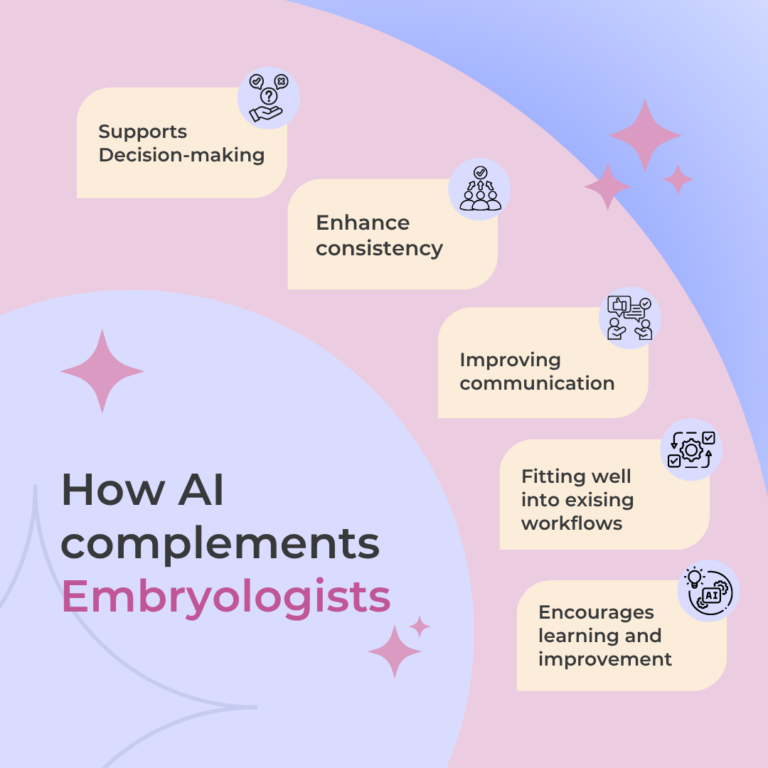
Figure 1: How AI complements Embryologists
🧬 How embryologists and AI can work together in practice
The most effective use of AI in IVF is not as a replacement for embryologists, but as a complementary tool.
AI provides data. Embryologists provide context.
In practice, this collaboration looks like:
1. Supporting decision-making, not replacing it
AI-generated insights can help interpret variability or unexpected outcomes. Final decisions remain grounded in clinical expertise.
2. Enhancing consistency across teams
Standardized outputs help align assessments across embryologists, particularly in larger or multi-site labs.
3. Improving communication
Objective insights can support clearer discussions with clinicians and patients—especially when outcomes don’t align with expectations.
4. Fitting well into existing workflows
The most effective tools integrate into routine lab processes, using images already captured without introducing additional risk or burden.
5. Driving continuous learning and feedback loops
AI can highlight patterns across cases over time, enabling embryologists to refine protocols and contribute to ongoing improvement.
🧬 AI and Embryology: a collaborative future
AI represents a shift—not away from embryologists, but toward a more data-informed practice.
Embryologists bring experience, judgment, and clinical understanding. AI brings consistency, scale, and the ability to detect patterns beyond human perception.
Together, they offer a more complete picture.
As adoption continues, embryologists are not just users of AI—they are critical to ensuring it is applied responsibly, effectively, and in a way that truly enhances patient care.
🧬 Frequently Asked Questions:
Can AI replace embryologists?
No. AI is most effective as a complementary tool, not a replacement. AI provides data — consistency, scale, and the ability to detect patterns beyond human perception. Embryologists provide context, judgment, and clinical understanding. Final decisions remain grounded in clinical expertise, and embryologists are critical to ensuring AI is applied responsibly and effectively.
What is AI in IVF?
In IVF, AI typically refers to machine learning models — and more specifically, deep learning — that analyze images of oocytes, embryos or other factors to generate predictions about clinical outcomes. These models are trained on large datasets of annotated images linked to real outcomes such as fertilization and blastocyst development, learning which visual features are associated with different results, even when those features are too nuanced to be explicitly defined by humans.
How accurate is AI at assessing oocyte quality?
AI has been shown to outperform experienced embryologists in predicting blastocyst development, with an average relative increased accuracy of 18% across four validation studies. It also demonstrates 100% repeatability when presented with the same oocyte image — compared to 81.4% for embryologists. This consistency is particularly significant in oocyte assessment, where no standardized visual scoring system currently exists.
What are the risks of using AI in the IVF lab?
Valid concerns include the reliability and transparency of AI outputs, ethical questions around patient data privacy and security, and ensuring that AI-generated scores translate meaningfully into clinical decisions rather than being used as standalone metrics. These are not reasons to avoid AI, but important checkpoints to apply when evaluating any tool for clinical use.
If you’re exploring how AI-powered oocyte assessment fits into your lab, you can explore Future Fertility’s published research or learn more about how VIOLET™ report for egg-freezing and MAGENTA™ report for IVF/ICSI are being used in clinics today.
You Might Also Like …
Join our mailing list for dispatches on the future of fertility